
Technology built
for the complexity
of modern care
Healthcare software that actually ships - and meets the compliance bar on day one. We build clinical platforms, interoperable data systems, and AI-powered care tools for hospitals, health networks, and digital health startups.
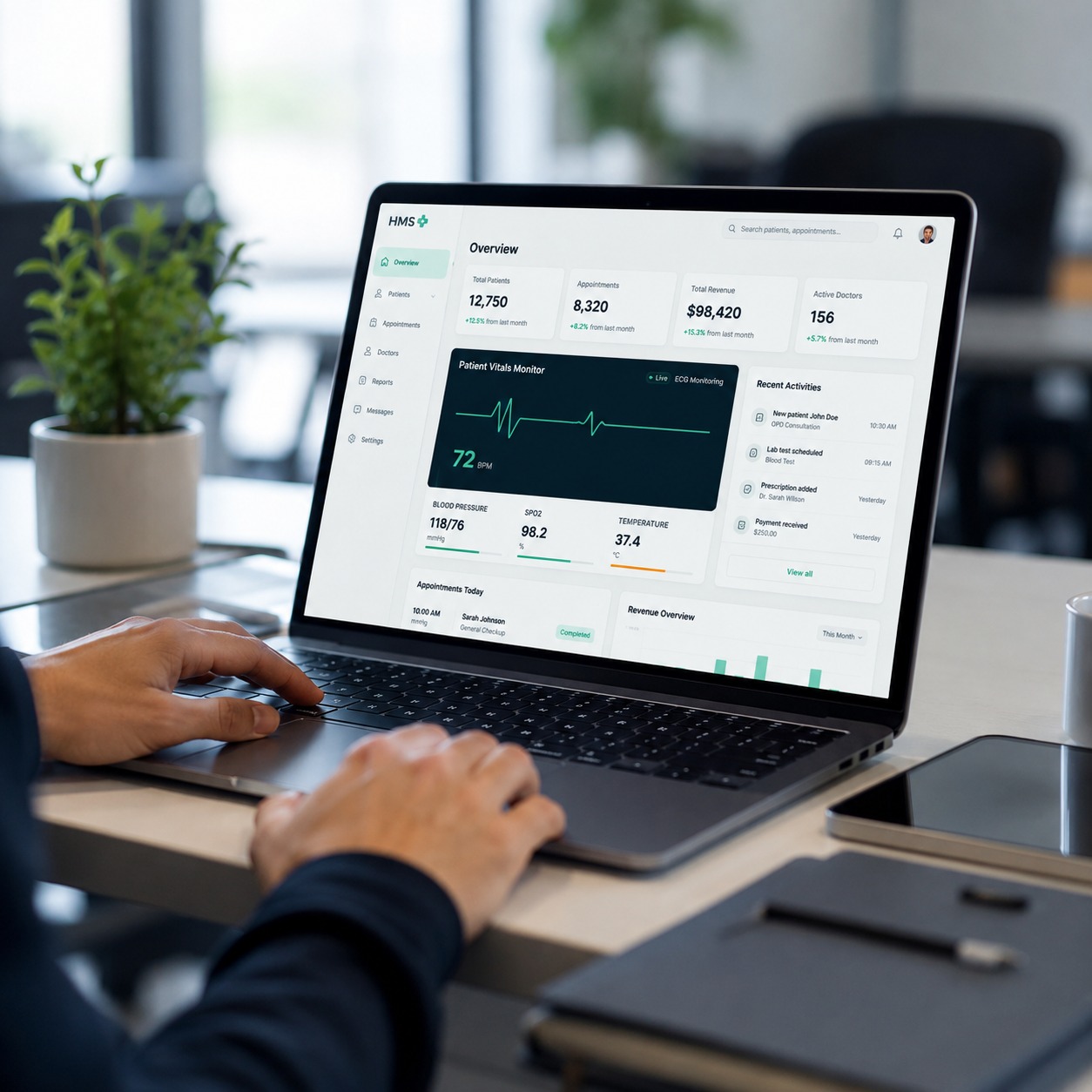
Healthcare technology
that clinicians trust
We build for the actual environment - interoperability requirements, clinical workflow constraints, EHR integrations, and all the compliance layers that general-purpose software firms skip.
Clinical Decision Support Platforms
Software that sits inside the clinical workflow and actually gets used - not another tab clinicians minimise. We design around the realities of care delivery: shift handovers, documentation burden, alert fatigue, and the specific EHR your organisation already runs.
Telehealth & Virtual Care
End-to-end telehealth platforms - video consultation infrastructure, asynchronous messaging, remote monitoring integrations, and the administrative workflows around scheduling, billing, and documentation. HIPAA-compliant from the transport layer up.
Health Data & Interoperability
HL7 FHIR R4 APIs, CCDA document processing, and real-time EHR data pipelines. We've built interoperability layers connecting dozens of healthcare systems - Epic, Cerner, Meditech, Athenahealth - without destroying the clinical data model in translation.
Patient Engagement Apps
Mobile apps and patient portals that people actually use between appointments - medication adherence, care plan tracking, symptom diaries, and bi-directional communication with care teams. Designed with accessibility and health literacy front of mind.
Healthcare AI & Analytics
Predictive risk models, NLP-powered clinical documentation, imaging analysis pipelines, and population health dashboards. We build AI tools that enhance clinical judgment rather than replacing it, with the explainability and audit trails that clinical governance requires.
Compliance built in,
not checked off
Every healthcare system we build starts with the privacy and security architecture - not with a feature backlog that "adds HIPAA later". That shift in sequencing is why our clients haven't had a breach.
HIPAA Privacy & Security by design
Minimum necessary access, PHI segmentation, and audit logging are architectural decisions we make before writing a user story - not compliance tasks added in sprint 12.
End-to-end encryption for PHI
Data encrypted at rest (AES-256), in transit (TLS 1.3), and at the field level where clinical data warrants it. Encryption keys managed through HSM-backed key management services, not application secrets.
Audit trails & access governance
Immutable audit logs for every PHI access - who saw what, when, from where. Role-based access control mapped to clinical roles, with automated access reviews and separation of duties for sensitive data classes.
Breach response in under 60 minutes
Documented incident response runbooks, automated anomaly detection, and a defined escalation path that gets a clinical security engineer on the issue within 60 minutes of detection - day or night.
What we've actually built
Real outcomes from real healthcare engagements - numbers from deployed systems, not projections.
Clinical decision support for sepsis detection
An NHS acute trust needed earlier sepsis identification across ED and inpatient wards. We built a real-time risk scoring engine integrated into their existing Epic workflow - surfacing alerts inside the EHR without requiring clinicians to leave the system they're already working in. Rolled out to 14 wards in 16 weeks.
Multi-state HIPAA telehealth platform, 0 to 800k users
A US digital health startup expanding from 3 states to 28 needed infrastructure that could handle the compliance and licensure complexity of multi-state virtual care. We built the platform, the HIPAA compliance layer, and the provider credentialling workflow - scaling from 12,000 to 800,000 active patients in 18 months.
Unified patient data platform across 6 disparate EHRs
A regional health network operating across Epic, Cerner, and two legacy systems had no consolidated view of patient history across sites. We built a FHIR-native data platform that normalises records across all four systems in real time - giving clinicians a unified longitudinal record without replacing any of the underlying EHRs.
The systems we
connect and build on
Healthcare runs on legacy infrastructure. We work with what's there - integrating cleanly rather than ripping and replacing.
We've seen what happens when healthcare software ships without the right foundation
Not a cautionary tale - a methodology. The healthcare teams we work with best are ones who've tried the general-purpose software firm and ended up with a HIPAA gap or a system that clinicians worked around.
Start a healthcare projectClinical context, not just technical capability
We have clinical informatics specialists and former NHS digital architects on the team - people who understand the difference between a workflow that works in a demo and one that works during a night shift. That context shapes every design decision.
HIPAA compliance is an engineering practice, not a checkbox
We run threat modelling sessions for every new system, maintain Business Associate Agreements with all sub-processors, and keep a living data flow map updated throughout the engagement. When auditors come, the documentation already exists.
EHR integrations that actually work
Epic and Cerner have reputations for difficult integrations. Ours work because we've done them before - we know the sandboxing process, the vendor review timelines, and the specific edge cases in FHIR implementations that aren't in the documentation.
Clinician adoption is an engineering goal
A clinical tool nobody uses is a failed project, even if it's technically correct. We run early co-design sessions with frontline clinical staff, prototype with real workflows, and measure adoption rates - not just launch metrics.
99.97% uptime on clinical systems
Healthcare systems don't get scheduled maintenance windows. We architect for continuous availability - active-active deployments, automated failover, and rolling deployments that update without disrupting an active clinical session. Our SLA is 99.97% and we've held it.
Common questions about healthcare software
Healthcare software procurement has a reputation for going wrong. These are the questions we hear most from teams trying to avoid that.
Still have questions? Talk to us →Let's build something that works for clinicians - and survives an audit.
Book a free 60-minute technical session with a healthcare engineering specialist. We'll review your requirements, identify the compliance and integration questions worth answering early, and give you a realistic view of timeline and approach - before anything is committed.