
Processes that ran
on human time
now run on their own
These aren't automation demos or pilot projects. They're live systems that handle invoice reconciliation for 12,000 suppliers, onboard new employees across 8 HR systems simultaneously, and route support tickets without a human in the loop. What follows is exactly what we built, how long it took, and what the numbers looked like afterward.
Five automation projects.
Five teams that stopped doing things manually.
Every project below is running today. We've included what the process looked like before, what we changed, and the numbers that came out the other side.
Invoice Processing & Accounts Payable Automation
NovaTrade's finance team was manually processing 12,000 supplier invoices per month across SAP, a procurement portal, and email. Each invoice took an average of 22 minutes to validate, match to a purchase order, and post. Errors caused by manual keying were running at 4.1%, generating disputes that tied up three full-time staff. We replaced the manual process with an RPA bot that extracts structured data from PDF and email invoices, validates against PO records in SAP, flags exceptions for human review, and posts clean invoices automatically.
Multi-System Employee Onboarding Workflow
ClarityMed operates across 14 hospitals with separate HR systems for clinical and administrative staff, plus NHS systems for credential verification, equipment allocation, IT provisioning, and payroll. A new employee onboarding took HR coordinators between 3 and 5 days of manual data entry across 8 different systems. Errors were common. We built an orchestration workflow that triggers on HR system creation and propagates all required data across every downstream system - with credential verification via NHS APIs, IT provisioning via ServiceNow, and payroll setup via Workday.

Contract Generation & Review Automation
Hartwell was generating standard commercial contracts from scratch each time - a paralegal would spend 2–4 hours on a contract that was 80% identical to the previous one. We built a contract generation platform with a structured intake form, clause library, approval workflow, and automated risk flag detection using NLP. Standard contracts now generate in under 4 minutes with clause-level risk annotations visible to the reviewing partner.
IT Helpdesk Triage & Ticket Routing Bot
Vantage's IT helpdesk was receiving 3,200 tickets per month. Level-1 triage - reading the ticket, categorising it, assigning priority, routing to the correct team, and sending an acknowledgement - was consuming 40% of the team's time. We built an intelligent triage bot that classifies tickets using a fine-tuned language model, routes based on category and urgency, auto-resolves common requests (password resets, software access, VPN config), and escalates edge cases with context pre-filled for the engineer.
Order Exception Management & Carrier Dispute Automation
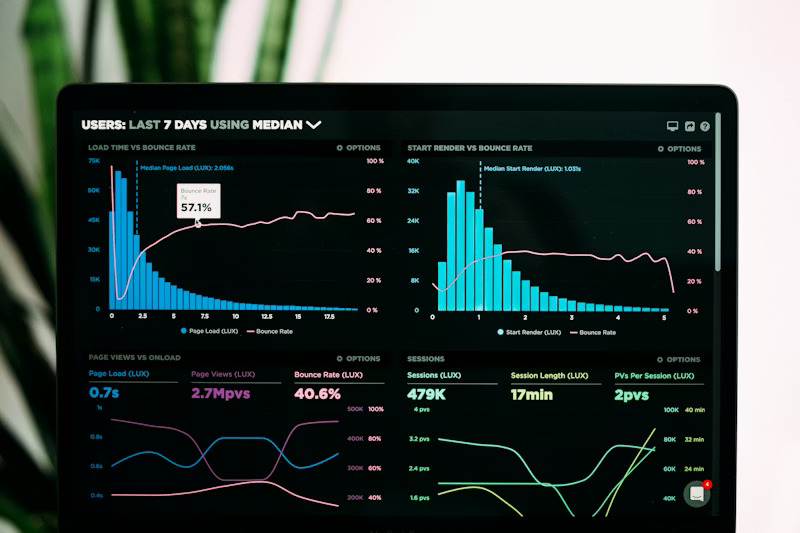
LogiSense handles logistics for 120 retail clients. Their operations team spent hours each day identifying failed deliveries, locating the relevant carrier records, opening dispute cases, and chasing resolution. We built a monitoring bot that watches delivery status APIs across 14 carrier integrations, automatically opens dispute cases when SLA thresholds are missed, attaches proof-of-delivery documentation, and escalates to a human only when the carrier disputes the claim.
RPA, workflow orchestration, and intelligent bots - in that order of complexity
Not every process needs AI. Some need a well-built RPA bot. We recommend the simplest approach that actually solves the problem - because simpler systems are easier to maintain at 2am when something breaks.
Robotic Process Automation (RPA)
UI-based automation that handles the work your existing systems weren't built to talk to each other about - data entry across multiple applications, screen scraping from legacy tools, copy-paste workflows between portals. UiPath and Power Automate for most projects; Blue Prism for regulated environments requiring full audit trail support.
Workflow Orchestration
Multi-system workflows that span approval chains, external APIs, conditional logic, and human checkpoints - all managed by an orchestration layer that tracks state, handles retries, and provides a complete audit trail. The difference between a workflow and a bot is that workflows handle complexity elegantly.
Intelligent Process Automation
When the process involves unstructured data - emails, documents, images, spoken language - an RPA bot alone isn't enough. We combine LLMs, NLP classifiers, and computer vision with the automation layer to handle inputs that vary too much for rule-based systems.
Customer-Facing Bots & Virtual Agents
Conversational AI agents that handle support queries, onboarding flows, and transactional requests - integrated into your CRM, helpdesk, and knowledge base. Escalation to a human agent is built in from the start, not treated as a failure mode.
Automation Monitoring & Health
Bots break when the UI they're interacting with changes. We build monitoring dashboards, exception alerting, and self-healing logic into every automation we deliver - so you know about failures before they stack up into a problem that needs a human to unwind.
Process first. Automation second.
Automating a broken process doesn't fix it - it just breaks faster. We map the current process in detail, identify where the actual friction is, and redesign the workflow before we write a single automation script.
Start with a process auditProcess Discovery & Mapping
We shadow the team doing the work, map every step, and document the edge cases that won't be in any procedure document. The average process we discover has 30% more variation than the team thinks it does.
Automation Feasibility & ROI Modelling
Not every process is a good automation candidate. We score each process on standardisation, volume, error rate, and data structure - then model the ROI at 6 and 12 months so you can make the decision with real numbers.
Bot / Workflow Build & Testing
Development in two-week sprints with a demo at the end of each. Test coverage includes happy path, edge cases, and failure modes - because bots in production encounter all three regularly.
Deployment, Monitoring & Handover
Every automation goes live with a monitoring dashboard, alerting rules, and a runbook. We include 60 days of hypercare after go-live, because that's when the real edge cases appear in production data.
What automation actually delivers - by process type
These are median outcomes across our live projects, not best-case projections from a vendor brochure. Individual results depend on process volume, complexity, and current error rates.
Get a process-specific ROI estimateTypical Engagement Economics
Based on median project outcomes across 40+ automation deployments. Finance and HR automation consistently deliver the highest ROI due to volume and current error rates.
Tool-agnostic. Outcome-driven.
We recommend tools based on your existing infrastructure, IT team capabilities, and long-term maintenance cost - not on vendor relationships.
What people ask before starting an automation project
Straight answers on process selection, cost, maintenance, and what actually determines whether automation delivers its promised ROI.
Ask us directly →Tell us which process costs the most - we'll tell you if automation is actually the answer
Book a free 60-minute process assessment. We'll map your current workflow, score it for automation suitability, and give you a realistic ROI estimate - before you spend anything. If automation isn't the right solution, we'll tell you that too.